by Gulf Offshore | Jul 24, 2026 | news

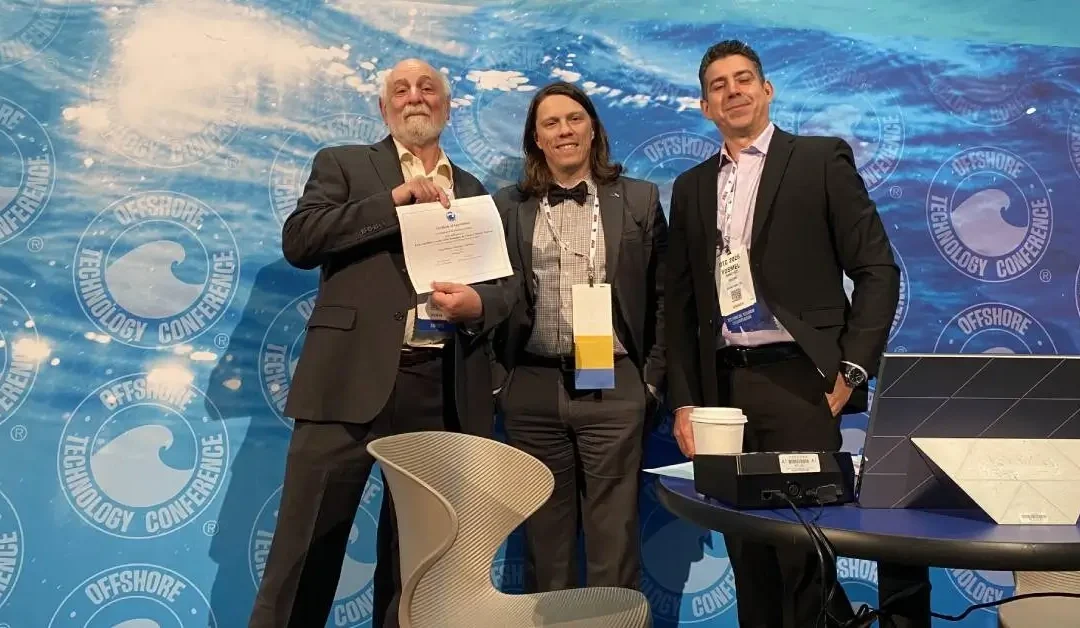
At this year’s Offshore Technology Conference, GORI Technical Director Alan Cohen presented “From Liabilities to Assets: GORI Reimagines the Future of Offshore Platforms” (OTC-36975-MS), a paper he co-authored with Executive Director Kent Satterlee. The presentation shared GORI’s plan for turning aging Gulf oil and gas platforms into multi-use hubs for energy, critical minerals, aquaculture, and ocean data monitoring.
The timing lined up with big news. The National Academies of Sciences, Engineering, and Medicine had just awarded GORI $20 million to help get this work off the ground. Roughly 1,300 Gulf platforms remain today, and 100 to 150 are removed every year. GORI’s approach turns that around, converting infrastructure slated for removal into revenue-generating, resilient assets instead. Starting with five pilot platforms, including South Pass 83, the team is proving out a scalable model that strengthens U.S. energy security, supply chains, and coastal economies, while also building pathways for workforce training and re-employment.
It’s a strong sign of momentum for GORI’s five-year plan to turn five Gulf platforms into regional assets that support jobs, clean energy, and domestic mineral supply chains.
by Gulf Offshore | Apr 23, 2026 | news
From Liabilities to Assets: GORI Reimagines the Future of Offshore Platforms
Gulf Offshore Research Institute wins $20 million Gulf Futures Challenge award to transform offshore platforms into hubs for energy, food, and ocean monitoring
MANDEVILLE, La. – April 23, 2026 – More than 1,300 offshore oil and gas platforms across the Gulf Coast region face decommissioning — and with them, the potential loss of thousands of jobs, a significant drop in reef fisheries biomass, and billions in revenue for Gulf Coast communities. Today, the Gulf Offshore Research Institute (GORI) announced it has been selected as one of only two recipients of a $20 million award through the National Academies of Sciences, Engineering, and Medicine (NASEM) Gulf Futures Challenge — funding that will transform these aging structures from liabilities into hubs for clean energy, sustainable seafood production, critical mineral recovery, and real-time ocean monitoring.
The Gulf Futures Challenge, led by NASEM’s Gulf Research Program (GRP), invests in bold, community-centered solutions to the Gulf region’s most pressing challenges in energy transition, environmental change, and community resilience. GORI’s award will support a five-year effort to retrofit and operationalize five offshore platforms, with permitting already underway through the Bureau of Ocean Energy Management.
GORI’s proposal — Repurposing Petroleum Infrastructure for Sustainable Energy, Food, and Critical Minerals — turns existing offshore structures into engines for the blue economy. By leveraging these structures as vertical reef ecosystems, the project protects marine biodiversity while creating new, innovative industries. This approach expands seafood production, supports renewable energy and mineral recovery, and strengthens coastal communities historically dependent on oil, gas, and fishing industries.
“We are transforming the backbone of oil and gas production into a more sustainable and prosperous Gulf Coast. By integrating renewable energy, aquaculture, mineral recovery, and ocean monitoring, we strengthen marine habitats, support thriving ecosystems, boost coastal economies, and advance sustainable energy production,” said Kent Satterlee, Executive Director of GORI.
“We are delighted by the national acknowledgement of the importance of offshore infrastructure in sustaining essential marine habitats, while simultaneously highlighting the potential to advance a thriving and sustainable blue economy supporting coastal communities in the Gulf,” said Rob Fondren, Co-Founder and Chairman of GORI.
“Offshore platforms already support flourishing ecosystems below water, while at the same time serving as infrastructure for the blue economy in the Gulf Region. Repurposing them offers a once-in-a-lifetime opportunity to leverage existing assets and avoid the massive cost of replacement,” said Dr. Greg Stunz, Senior Executive Director, Harte Research Institute.
“Choosing the right platforms is the foundation of this entire effort. Through FishLAT, our machine learning assessment tool, we can screen all 1,300 platforms in the Gulf and match each one to its highest-value reuse — whether that’s aquaculture, renewable energy, or ocean monitoring. This moves platform repurposing from a concept to a data-driven, defensible decision,” said Amber Sparks, Co-Founder of Blue Latitudes LLC and GORI partner.
Project Partners
What makes this project distinctive is the breadth of expertise assembled under a single initiative — spanning marine science, offshore engineering, renewable energy, aquaculture, critical mineral recovery, and community workforce development. No comparable multi-benefit strategy has previously been attempted at this scale in U.S. waters. The project brings together a multidisciplinary team, including:
- Harte Research Institute (HRI) at Texas A&M University–Corpus Christi — expertise in fisheries, socioeconomics, and marine policy and law
- Blue Latitudes, LLC — a women-owned marine environmental consulting firm specializing in offshore work and Rigs to Reefs planning
- University of Southern Mississippi and Louisiana State University — advancing open-ocean aquaculture, hydrographic science, and uncrewed ocean monitoring
- University of Houston — specializing in offshore hydrogen production and energy transition feasibility (ROICE Program) and workforce development
- University of Michigan — pioneering sustainable critical mineral extraction from seawater
- Gulf Trust — advancing solutions that unite industry, environment, and communities
- The FerVID Group — assessing geothermal energy potential in offshore reservoirs
- Blue Silo Aquaculture, LLC — specializing in platform-assisted open-ocean aquaculture
Work begins with platform permitting, stakeholder engagement, and structural assessments. An offshore platform located off the Mississippi River delta in 470 feet of water will serve as the flagship demonstration site, with aquaculture and critical mineral pilots, ocean monitoring systems, and renewable energy testbeds to follow in Years 3 through 5. By 2030, GORI expects to have five operational platforms producing measurable environmental, economic, and social returns — and a replicable playbook for the remaining structures across the Gulf Coast region.
For more information about GORI’s work, visit www.gulfoffshoreresearch.com.
Media Contact:
Sara Hamann
Communications Director
Gulf Offshore Research Institute
sarah@gulfoffshoreresearch.com
by Gulf Offshore | Sep 12, 2025 | Press Release
Finalist in the $50M Gulf Futures Challenge, GORI leads a bold effort to repurpose retired oil platforms into hubs for energy, food, minerals, and marine conservation
Louisiana – September 9, 2025 – The Gulf Offshore Research Institute (GORI) advanced to the finalist stage of the prestigious $50 million Gulf Futures Challenge with a groundbreaking initiative to repurpose retired offshore oil and gas platforms into hubs for renewable energy, sustainable seafood production, critical mineral harvesting, data streaming, and marine habitat conservation.
The Gulf Futures Challenge, powered by The National Academies of Sciences, Engineering, and Medicine’s Gulf Research Program and Lever for Change, invests in bold solutions to address the Gulf region’s most critical challenges in energy transition, environmental change, and community resilience. As a finalist, GORI will compete for one of two $20 million awards to scale its offshore demonstration projects.
GORI’s proposal—Repurposing Petroleum Infrastructure for Sustainable Energy, Food, and Critical Minerals—turns existing offshore structures into engines for the blue economy. The initiative aims to preserve marine habitats, expand seafood production, develop renewable energy and mineral recovery, and strengthen coastal communities historically dependent on oil, gas, and fishing industries.
“We are transforming the backbone of oil and gas production into a cleaner, more sustainable, and more prosperous Gulf Coast,” said Kent Satterlee, Executive Director of GORI. “By integrating renewable energy, aquaculture, mineral recovery, and ocean monitoring, we strengthen marine habitats, support thriving ecosystems, boost coastal economies, and advance sustainable energy production.”
“Offshore platforms already support ecosystems below water and clean energy potential above,” said Dr. Greg Stunz, Senior Executive Director, Harte Research Institute. “Repurposing them offers a once-in-a-lifetime chance to leverage existing assets instead of replacing them at massive cost.”
Our approach will guide strategies to transition Gulf infrastructure into long-term community and environmental assets.
“This recognition proves the Gulf has the talent, technology, and vision to lead the next chapter of offshore innovation,” said Amber Sparks, Co-Founder of Blue Latitudes LLC and GORI partner.
The finalist project unites a powerhouse team of partners, including:
- The Harte Research Institute (HRI) at Texas A&M University–Corpus Christi – bringing expertise in fisheries, socioeconomics, and marine policy and law
- Blue Latitudes, LLC – an internationally recognized, women-owned marine environmental consulting firm specializing in offshore work and Rigs to Reefs project planning
- The University of Southern Mississippi – advancing open-ocean aquaculture, hydrographic science, and uncrewed ocean monitoring
- University of Houston (ROICE Program) – specializing in offshore hydrogen production and energy transition feasibility studies
- University of Michigan – pioneering sustainable critical mineral extraction from seawater
- Gulf Trust – advocating for pragmatic solutions that unite industry, environment, and communities
- The FerVid Group – assessing geothermal energy potential in offshore reservoirs
- Blue Silo Aquaculture, LLC – a for-profit company specializing in platform-assisted open-ocean aquaculture
For more information about GORI’s work, visit www.gulfoffshoreresearch.com
Sara Hamann
Communications and Scientific Director, Gulf Offshore Research Institute
sarah@gulfoffshoreresearch.com
